
Parawing Guide
With parawing, you use a soft wing (similar to a kite) with short lines to build speed and get up on the foil. When the waves carry you, you can tuck the wing away and continue surfing with your hands free.
Here at Surfers, we’ll help you choose a setup that suits your weight, experience, and the conditions you want to ride in. The right board and foil are just as important as the parawing itself.
Contents
Do I need to know how to foil first?
You’ll have a much easier time getting started if you already know how to wingfoil or have other foiling experience. That way, you can focus on the parawing and line handling. If you’re a complete beginner, we recommend that you start with foil lessons before combining foiling with parawing.
What size parawing should I use?
The size depends on your weight, wind strength, and how easily the board and foil get moving. A larger wing provides more lift in light winds, while a smaller one is better when the wind is stronger.
| Size | General range of use |
|---|---|
| 2–3 m² | Stronger winds or lighter riders. |
| 3–4 m² | Moderate to brisk winds for lighter and medium-weight riders. |
| 4–5 m² | A common size range for the first paraglider for medium-weight riders. |
| 5–6 m² and larger | Lighter winds or heavier riders. |
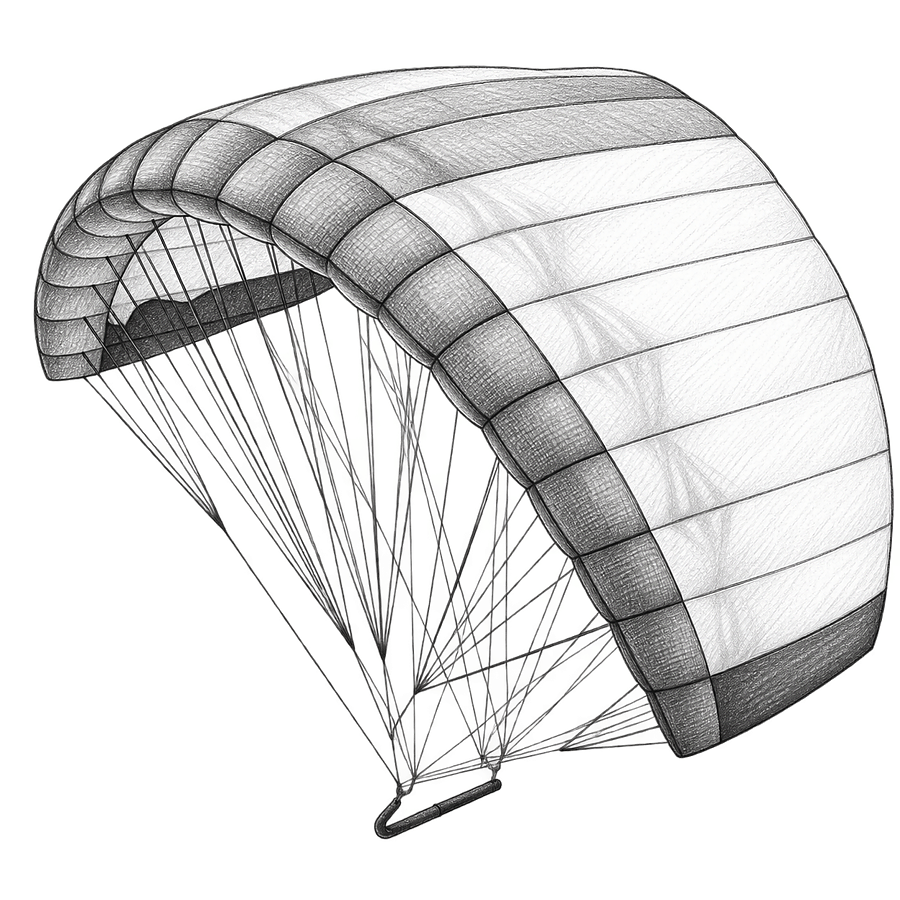
In that case, 4–5 m² is often a good place to start looking. Always follow the manufacturer’s wind chart—parawings of the same size can provide different amounts of power.
Prioritize stable flight, predictable pull, and an easy water launch. Your first few sessions will be easier in steady, moderate winds than in very light or strong winds.
Which board type is best?
Mid-length:A Good First Choice
A great first choice for many. The longer shape provides good glide and helps you build speed before takeoff. Choose a board that’s wide enough to let you kneel and stand up steadily.
See wingfoil and midlength boardsDownwind board
Longer and narrower. Effective for launching and well-suited for downwind sailing and lighter winds. A very narrow board, however, requires more balance, even if it has plenty of volume.
See downwind boardsStandard wingfoil board
Can work if you already have one with sufficient buoyancy. Short and compact models often require more pull and better launch technique.
How big of a board do I need?
For a person weighing 80 kg, the general guidelines are about 90–100 liters with good foiling experience, or 100–120 liters for more support. Among mid-length and shorter downwind boards, approximately 6–7 feet (183–213 cm) is a relevant length range to compare.
Consider the overall shape:lengthhelps the board build speed,widthprovides balance, andvolumeprovides buoyancy.
| Experience | Volume Guidelines |
|---|---|
| Experienced foil rider, new to parawing | Body weight in kg + approximately 10–20 liters |
| Prioritizes stability and easier launches | Body weight in kg + approximately 20–40 liters |
Which foil is best for beginners?
Choose a foil that lifts early, flies stably at low speeds, and has good glide. A glide-oriented freeride or downwind foil with a medium-to-high aspect ratio is often a good choice. This means a relatively long, narrow leading edge that helps you keep flying when the pull from the paraglider decreases.
Avoid starting with a foil that’s too small or a demanding high-speed foil.
| Rider Weight | Approximate front wing area |
|---|---|
| Under 65 kg | 900–1,200 cm² |
| 65–80 kg | 1,100–1,400 cm² |
| 80–95 kg | 1,250–1,600 cm² |
| Over 95 kg | 1,400–1,800 cm² |
Rough guidelines for easy-to-lift foils. Profile, wingspan, and construction have a significant impact, so don’t choose based solely on surface area. An experienced rider can often go down a size.
A mast around 75–85 cm is a practical starting point for many. Pair it with the stabilizer and fuselage recommended by the manufacturer for easy and stable riding.
Safety and Accessories
Wear a water sports helmet, appropriate flotation device, and a wetsuit appropriate for the water temperature. An impact vest is not automatically an approved life jacket.
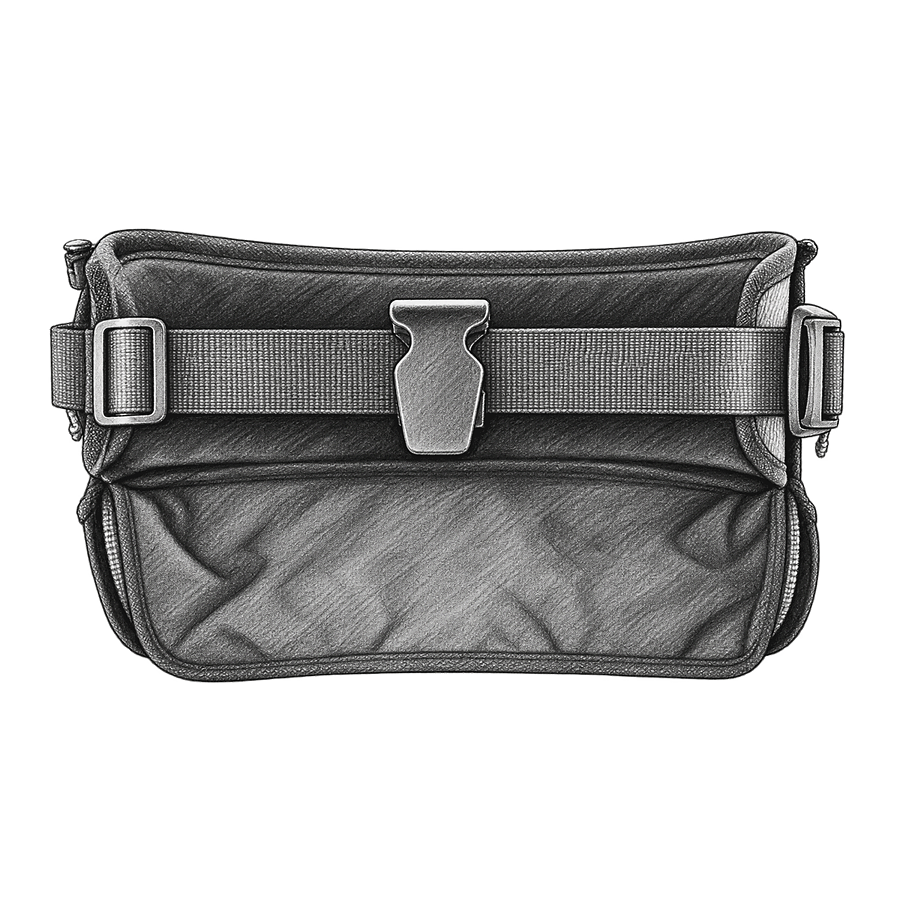
A board leash is essential to prevent losing your board in the waves. Choose a leash that reduces the risk of getting tangled in the paraglider’s lines. Learn how to release the tension and make your way back to shore. A storage belt is handy when you start packing up the wing.
You don’t need a harness the first few times—but as soon as you’ve got the hang of it, we’d say it’s a must. Being able to clip in gives you a completely different feel on the foil: you gain more lift, have better control, and handle wind gusts more effectively. A harness for a parawing is really just a (plastic) hook that attaches to the storage belt. That’s all you need.
Start in steady winds, small waves, and with plenty of space.Avoid offshore winds and large waves at first.
We’ll help you find the right gear
Our advice at Surfers is to prioritize easy starts and control. An easy-to-ride board, a forgiving foil, and the right size parawing are the tools you need to succeed and progress quickly.
Tell us your weight, your experience level, and where you plan to ride, and we’ll help you find the right gear from the start.